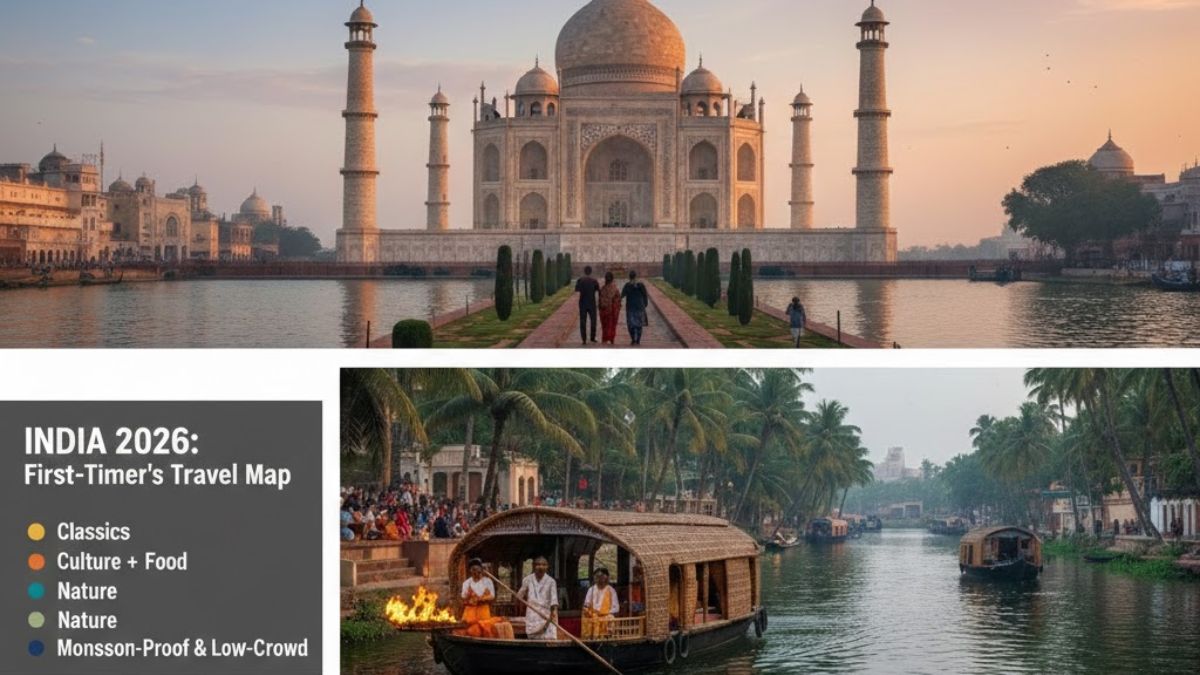
Planning a trip to India in 2026? Skip the overhyped tourist traps. Find out the 12 best places to visit in India with honest trade-offs on crowds, costs, and 2026 rail updates.
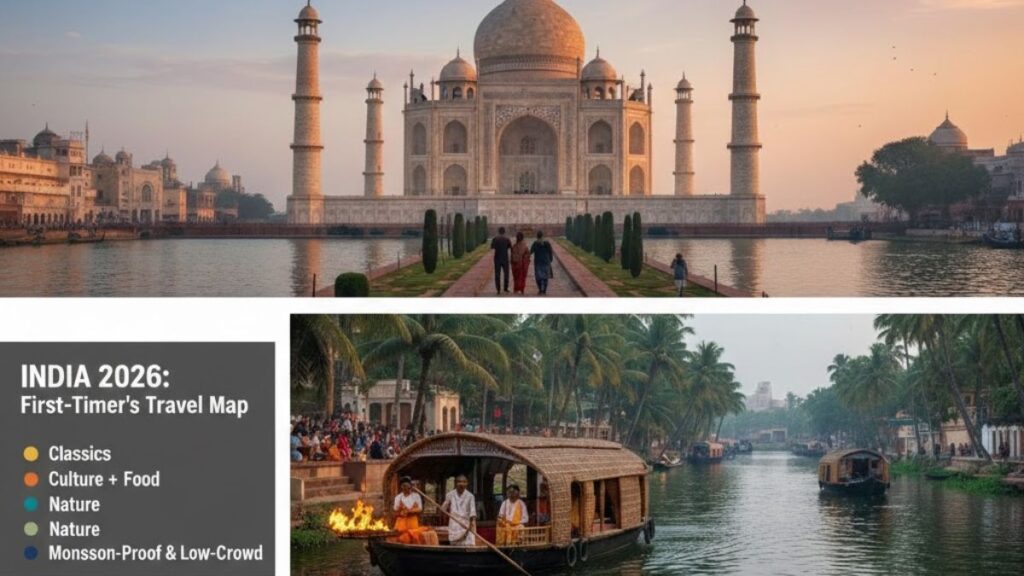
The 2026 Dispatch: Why India is Changing Your Travel Map
India in 2026 is no longer the “shanti-shanti” backpacker trail of the nineties, nor is it the logistical nightmare it once was. The nation is in the midst of a massive infrastructure pivot. The Vande Bharat high-speed trains have slashed travel times between major hubs like Delhi, Jaipur, and Varanasi, while the expansion of regional airports under the UDAN scheme means you can swap 12-hour bus rides for 60-minute hops (India e-Visa portal).
However, “improved access” is a double-edged sword. Domestic tourism is at an all-time high, meaning iconic spots are more crowded than ever. Weather volatility is also the new normal; the India Meteorological Department (IMD) reports increasingly unpredictable “mini-monsoons” outside of the traditional July–September window. For the first-timer, 2026 demands a strategy of “pacing over quantity.” It’s about choosing curated beats that offer the soul of the country without the sensory exhaustion of trying to “see it all.”
I. The First-Timer Classics (The Golden Triangle + 1)
1. Delhi: The Layered Capital
The gateway for most, Delhi is where 2,000 years of history meet a chaotic, hyper-modern present.
Field Note: Delhi
- Why go: To see the sheer architectural scale of the Mughal and British Empires in one afternoon.
- Best months: November to February. Risk: Severe smog in November/December.
- Getting there: Indira Gandhi International (DEL); 30-40 mins to city center via Airport Express Metro.
- Daily Budget: $75 (Midrange).
- Swap: Skip the overcrowded Chandni Chowk rickshaw tour; take a sunset walk through the Lodhi Gardens instead.
2. Agra: The Monumental Anchor
Home to the Taj Mahal, this is the non-negotiable stop, but the city itself requires a “hit and run” strategy.
Field Note: Agra
- Why go: The Taj Mahal—it’s a UNESCO World Heritage site that actually lives up to the photos.
- Best months: October to March. Risk: Dense morning fog in January can hide the Taj entirely.
- Getting there: Gatiman Express from Delhi (1 hour 40 mins).
- Daily Budget: $60.
- Swap: Skip the Agra Fort “light and sound show”; watch the sunset from Mehtab Bagh across the river for better views.
3. Jaipur: The Pink Gateway
The most accessible “exotic” India, blending royal forts with vibrant textile markets.
Field Note: Jaipur
- Why go: To explore the Archaeological Survey of India (ASI) protected Amber Fort and buy world-class jewelry.
- Best months: October to March. Risk: Intense dry heat starting in April.
- Getting there: Jaipur International (JAI) or a 4-hour drive/train from Delhi.
- Daily Budget: $85.
- Swap: Skip the Hawa Mahal interior (it’s just a wall); grab a coffee at Wind View Cafe opposite for the iconic photo.
II. Culture + Food Cities
4. Varanasi: The Spiritual Epicenter (one the Best Places to Visit in India)
One of the world’s oldest living cities. It is intense, loud, and deeply moving.
Field Note: Varanasi
- Why go: The evening Ganga Aarti ceremony on the riverbanks.
- Best months: November to February. Risk: High humidity and crowds during festivals.
- Getting there: Lal Bahadur Shastri Airport (VNS) or direct Vande Bharat train from Delhi (8 hours).
- Daily Budget: $50.
- Swap: Skip the aggressive “burning ghat” guides; book a private sunrise boat with a reputable guesthouse.
5. Amritsar: The Soul of Punjab
Home to the Golden Temple, the center of the Sikh faith and a masterclass in hospitality.
Field Note: Amritsar
- Why go: To witness the Langar (free kitchen) that feeds 100,000 people daily.
- Best months: October to March. Risk: Biting cold in late December.
- Getting there: Sri Guru Ram Dass Jee International (ATQ) or 6 hours by rail from Delhi.
- Daily Budget: $55.
- Swap: Skip the overly staged Wagah Border flag ceremony if you hate loud crowds; spend more time inside the Temple complex at night.
6. Mumbai: The Maximum City
The financial and cinematic heart of India. It’s where old colonial charm meets a soaring skyline.
Field Note: Mumbai
- Why go: For the Art Deco architecture and the best street food in Asia.
- Best months: December to February. Risk: Extreme flooding in July/August.
- Getting there: Chhatrapati Shivaji Maharaj International (BOM).
- Daily Budget: $110.
- Swap: Skip the Gateway of India ferry during weekends; take a walking tour of the Kala Ghoda art district.
III. Nature Without the Long Detours
7. Udaipur: The Lake City
Often called the “Venice of the East,” it offers a slower, romantic pace in Rajasthan.
Field Note: Udaipur
- Why go: Lakeside heritage hotels and boat rides at Lake Pichola.
- Best months: September to March. Risk: Lakes can be low if the previous monsoon failed.
- Getting there: Maharana Pratap Airport (UDR); 40 mins from city.
- Daily Budget: $95.
- Swap: Skip the Jagdish Temple if you’re “templed out”; hike to Sajjangarh (Monsoon Palace) for the best city views.
8. Alleppey (Alappuzha): The Backwaters
The quintessential Kerala experience—drifting through palm-fringed canals on a houseboat.
Field Note: Alleppey
- Why go: For “slow travel” through the emerald-green Kerala backwaters.
- Best months: November to February. Risk: Heat and mosquitoes in April/May.
- Getting there: Cochin International (COK) + 2-hour drive.
- Daily Budget: $120 (for private houseboat).
- Swap: Skip the large, noisy tourist houseboats; book a smaller, traditional shikara for a more intimate canal tour.
Cheapest Honeymoon in Florida (Under $1,000) – 10 Romantic Getaways [2026]
IV. Monsoon-Proof & Low-Crowd Picks
9. Rishikesh: The Yoga Capital
Nestled in the Himalayan foothills where the Ganges runs clear.
Field Note: Rishikesh
- Why go: World-class yoga retreats and white-water rafting.
- Best months: March to May and September to November. Risk: Rafting is banned during the July monsoon.
- Getting there: Fly to Dehradun (DED) + 45-min taxi.
- Daily Budget: $65.
- Swap: Skip the crowded Laxman Jhula main street; stay in the quieter Tapovan or Neelkanth areas.
10. Hampi: The Lost Empire
A boulder-strewn landscape filled with the ruins of the Vijayanagara Empire.
Field Note: Hampi
- Why go: Breathtaking UNESCO ruins and a “Mars-like” landscape.
- Best months: November to February. Risk: It is incredibly hot in the sun with no shade.
- Getting there: Overnight train from Bangalore or fly to Jindal Vidyanagar (VDY).
- Daily Budget: $60.
- Swap: Skip the overpriced luxury resorts in Hospet; stay in a local guesthouse on the “Hippie Island” (Virupapur Gaddi) side.
11. Ladakh (Leh): The High Desert
A piece of Tibet in India, featuring high-altitude passes and azure lakes.
Field Note: Ladakh
- Why go: For the stark beauty of the Himalayas and Buddhist monasteries.
- Best months: June to September (the only time roads are fully open). Risk: Altitude sickness is a real threat.
- Getting there: Fly into Leh (IXL). Mandatory: 48 hours of rest for acclimatization.
- Daily Budget: $100.
- Swap: Skip the crowded Pangong Lake day trip (it’s 10 hours in a car); spend a night in the Nubra Valley instead.
12. Wayanad: The Green Alternative
A lush, forest-covered escape in Kerala that is far less commercialized than Munnar.
Field Note: Wayanad
- Why go: For trekking, wild elephants, and coffee plantations.
- Best months: October to May. Risk: Heavy rain can cause landslides in August.
- Getting there: Kozhikode Airport (CCJ) + 3-hour drive.
- Daily Budget: $70.
- Swap: Skip Munnar’s tea crowds; choose a farmstay in Wayanad for an authentic “God’s Own Country” vibe.
FAQ: Navigating the India Realities
Is India safe for tourists?
Yes, but it requires “situational awareness.” Stick to well-trafficked areas, use reputable transport apps (Uber/Ola), and avoid walking alone in isolated areas at night.
How do I avoid common scams?
The “Hotel is closed/burned down” scam is the most common. Never trust a driver who tells you your pre-booked accommodation is inaccessible. Verify with the hotel directly.
What’s the deal with SIM cards?
Avoid airport kiosks if possible; they are overpriced. Visit an official Airtel or Jio store in the city with your passport and visa copy for a “Tourist SIM.”
How do I handle payments?
India is now a digital-first economy via UPI. While most shops use it, foreign travelers often struggle to link international cards. Carry cash (Rupees) for small vendors and use credit cards for hotels/malls.
What is the dress etiquette?
Modesty is key, especially at religious sites. Keep shoulders and knees covered. Carrying a light scarf is a “travel hack” for entering temples.
Is solo female travel recommended?
Many women travel solo in India successfully. Use women’s-only train carriages, stay in highly-rated hostels, and arrive at new destinations during daylight hours.
How should I tip?
In restaurants, 10% is standard if no service charge is added. For drivers, ₹100–₹200 per day is appreciated.
What is the best way to move between cities?
For long distances, fly. For the “India experience,” book 2AC or 3AC train classes weeks in advance via the IRCTC portal or apps like 12Go.
Note: Travel details are current for 2026. Always verify entry requirements via the official India e-Visa portal. Consult the IMD for real-time weather alerts and the ASI for monument timings. High-altitude travel (Ladakh) requires a 48-hour acclimatization period. Ensure comprehensive travel insurance is secured before departure.